EV Home Charger: What U.S. Drivers Should Choose Before They Buy
An EV home charger is more than a plug-in accessory. It is the part of EV ownership that determines whether charging feels effortless or becomes a recurring inconvenience. A well-planned setup lets a driver come home, plug in, and start each day with the range needed for normal travel. A poor setup can mean slow charging, overloaded electrical equipment, expensive rework, or a costly charger that delivers no practical benefit.
For most U.S. households with a battery-electric vehicle, a professionally installed Level 2 EV home charger is the right long-term choice. That is the clear conclusion. It provides enough charging capability for typical daily driving, is far more convenient than relying on a standard wall outlet, and generally avoids the unnecessary complexity of trying to replicate public fast charging at home. But “buy a Level 2 charger” is not enough advice. The correct EV home charger depends on the vehicle, the home’s electrical capacity, the location of the parking space, local permitting requirements, and when electricity costs the least.
The charger itself is often the easiest part of the project. The hard part is planning the electrical work correctly before buying equipment.
First, Understand What an EV Home Charger Actually Does
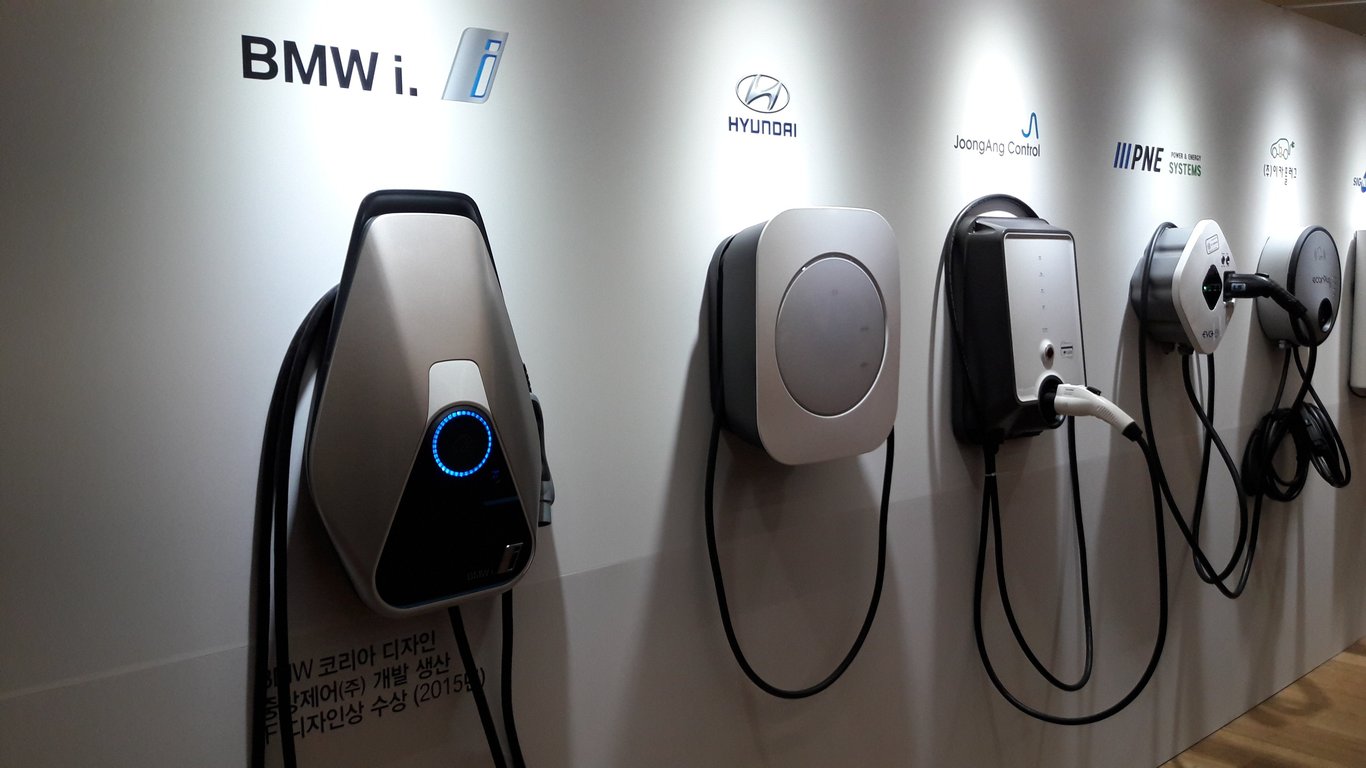
Drivers commonly call the wall-mounted unit a charger, but the vehicle contains the equipment that converts household alternating current into the direct current stored in its battery. The home unit is more accurately described as electric vehicle supply equipment, or EVSE. Its job is to safely provide power and communicate with the vehicle about how much current is available.
That distinction matters because the charging result is limited by more than the unit on the wall. The vehicle’s onboard charging capacity, the branch circuit, the wiring, the connector, and the home’s electrical service all affect the outcome. Buying a high-output EV home charger does not force a vehicle to accept more power than it was designed to take.
This is why shoppers should resist a common but weak assumption: that the highest-rated charger is automatically the best charger. It is not. An oversized unit can be a sensible future-proofing choice in some homes, but it can also trigger a more expensive installation while providing no meaningful improvement in overnight convenience.
Level 1 vs. Level 2: The Decision Most Drivers Need to Make
Most EV home charging decisions begin with two options. Level 1 charging uses a standard household outlet and the portable cord set supplied with many vehicles. Level 2 charging uses a higher-voltage circuit, similar in principle to the circuit used for certain large household appliances, along with either a hardwired charging unit or a compatible outlet.
Level 1 charging is not useless. It can work well for a plug-in hybrid, a household with very low daily mileage, a second vehicle that sits for long periods, or a driver who has many hours between trips. It also has the advantage of requiring little or no electrical installation if an appropriate outlet is already available and verified to be in good condition.
Still, Level 1 is often presented as a universal solution when it is really a compromise. It replenishes energy gradually. For a full battery-electric vehicle used as a primary car, that pace may not consistently restore the energy used during a busy day, especially when the vehicle arrives home late and needs to leave again early. Extension cords, worn outlets, and improvised garage wiring are not substitutes for a proper charging plan.
Level 2 charging is the better default for most full-EV owners because it gives the household more flexibility. It can typically replenish daily driving needs during an overnight parking period without requiring the driver to manage charging around every errand. That is the central advantage: not maximum speed for its own sake, but dependable recovery of the range a driver uses.
A Level 2 EV home charger also makes ownership easier when routines change. A longer-than-normal commute, a weekend road trip, cold weather, multiple drivers, or an unexpected evening outing all become less disruptive when the car can recover energy at a useful rate at home.
Do Not Buy a Charger Until You Check the Vehicle
The vehicle should set the upper limit of the decision. Before choosing an EV home charger, confirm the vehicle’s charging connector, its maximum Level 2 charging capability, and whether any adapter is required. In the U.S., connector compatibility has become more complicated as automakers transition toward the North American Charging Standard while many existing vehicles and charging products use the J1772 standard for Level 2 charging.
Fortunately, a connector issue is usually manageable through native compatibility or an approved adapter. But it should be resolved before installation, not after an electrician has mounted equipment in a location that is awkward for the vehicle’s charge port.
More importantly, know what the vehicle can accept. If an EV’s onboard charging system cannot use the full output of a particular EV home charger, the extra capacity may have limited immediate value. That does not necessarily make the charger a bad purchase. A higher-capacity unit may suit a future vehicle or a second EV. But the buyer should make that choice intentionally, rather than paying for a specification that will not improve today’s charging experience.
Also consider cable reach. The charging cable should comfortably reach the car’s port in the normal parking position without being stretched, sharply bent, run across a walkway, or dragged through standing water. Measure the parking arrangement, including whether the vehicle may be parked in either direction. A charger mounted on the wrong wall can be a daily annoyance for years.
Electrical Capacity Matters More Than Charger Features
The biggest mistake in EV home charger shopping is treating installation as an afterthought. The electrical system determines what can be installed safely and economically. A qualified electrician should evaluate the main service, panel capacity, available breaker space, route for new wiring, panel location, and expected household loads.
Homes vary widely. A newer home with a garage near the electrical panel may support a straightforward installation. An older home, a detached garage, a long driveway, a condominium parking space, or a panel already crowded with circuits can turn the project into something much more involved. The cost difference is often driven by trenching, cable length, panel work, service upgrades, and local permit requirements—not by the difference between one charging unit and another.
There is also an important continuous-load rule of thumb: EV charging can run for extended periods, so the circuit and charging settings must be sized appropriately for continuous use. This is not an area for guesswork, bargain wiring, or a do-it-yourself workaround based on an internet forum. Charging equipment should be listed for its intended use, installed according to applicable electrical codes, and configured to match the circuit.
If the home cannot comfortably support the desired charging load, that does not automatically mean a full service upgrade is required. Load-management equipment may allow charging to reduce or pause when the home is using substantial electricity elsewhere. Some drivers can also choose a lower charging setting and still have more than enough overnight capacity. A thoughtful solution is often better than immediately pursuing the most expensive electrical project.

Hardwired or Plug-In EV Home Charger?
A Level 2 EV home charger can be hardwired directly into the electrical system or connected through an appropriate receptacle. Both approaches can be valid, but hardwiring is generally the stronger choice for a permanent installation.
A hardwired unit eliminates one connection point, avoids dependence on an outlet that may wear over time, and can support higher charging output when the electrical design allows it. It also tends to look cleaner and may be better suited to outdoor or exposed locations, depending on the equipment rating and installation conditions.
A plug-in charger has a legitimate advantage: it is easier to replace or take to another home. It can also be practical when a suitable outlet already exists and the circuit has been confirmed for EV charging. But drivers should not assume any existing appliance outlet is ready for this job. The receptacle type, circuit rating, wire condition, installation quality, and duration of expected use all matter.
The wrong reason to choose a plug-in EV home charger is to avoid an electrical assessment. If the installation needs dedicated wiring, a new breaker, or upgraded equipment, adding a receptacle does not make the underlying work disappear. It simply adds another component.
Smart Features Are Useful, but Reliability Comes First
Many EV home chargers offer Wi-Fi connectivity, smartphone controls, charging schedules, energy-use tracking, access controls, and load-management features. These can be genuinely useful, especially for drivers on time-of-use electricity plans or households with more than one EV.
Scheduling is one of the most practical features. If a utility offers lower rates during certain hours, the charger or vehicle can be set to begin charging when those rates apply. This may reduce operating costs without changing how the driver uses the car. The best approach is usually to set the vehicle’s target charge level and schedule charging around the household’s real departure time, rather than charging immediately to full every night out of habit.
Energy monitoring can also help an owner understand EV electricity use and compare it with public charging expenses. For a rental property, shared driveway, or multi-driver household, access controls may prevent unauthorized charging.
However, smart features should not outrank basic reliability. A charger should be easy to operate even when the internet is unavailable. Its cable should be manageable in cold or hot conditions. The enclosure should be appropriate for its location. The manufacturer should provide a clear warranty and support path. Software functions are welcome, but a charging unit that becomes frustrating because of app failures or unreliable network connections is not a smart purchase.
Buy the features that solve a real problem. Do not pay extra merely to collect app icons.

Charging Speed Should Match Daily Mileage, Not Anxiety
Many EV shoppers focus on the question, “How fast can this charger charge?” A better question is, “How much energy do I need to replace between the time I park and the time I leave?”
For most drivers, the answer is much less dramatic than the marketing suggests.
If a vehicle is parked at home for many hours overnight, a moderate Level 2 setup may be entirely sufficient. Moving to the highest available residential charging rate may shorten the charging session, but it may not change the driver’s routine at all. If the car is already ready by morning, faster charging has no daily benefit.
Higher output becomes more compelling for households with unusually high mileage, limited charging windows, two EVs, frequent back-to-back trips, or a vehicle that accepts a higher Level 2 rate. It can also be sensible when electrical work is being done once and the cost of installing appropriately sized wiring now is lower than reopening walls or upgrading equipment later.
That is the right form of future-proofing: build flexibility where the installation cost justifies it, not by blindly choosing the most powerful charger on the shelf.
Do Not Confuse Home Charging With DC Fast Charging
Public DC fast charging can add substantial range much more quickly than typical home equipment because it supplies direct current to the battery and uses specialized high-power infrastructure. Most homes are not designed to provide that kind of power, and most drivers do not need them to.
Trying to make home charging imitate a highway fast-charging stop is usually a poor use of money. Home charging is for routine replenishment while the vehicle is already parked. DC fast charging is for long-distance travel, time-sensitive trips, and situations where home or destination charging is unavailable.
The most satisfying EV ownership pattern combines the two: dependable home charging for everyday use and public fast charging only when the trip demands it. A driver who has reliable Level 2 charging at home usually needs fewer public charging stops, not more.
Installation Planning: Questions to Answer Before You Order
Before purchasing an EV home charger, gather the information an electrician will need. This makes estimates more accurate and helps prevent a charger from arriving before the home is ready.
- Where does the vehicle normally park, and where is its charge port located?
- Is the parking space in an attached garage, detached garage, carport, driveway, or shared parking area?
- Where is the main electrical panel, and how difficult is the route from the panel to the charging location?
- What is the home’s electrical service capacity, and are there major electric loads such as electric heating, a heat pump, electric water heating, a dryer, or an electric range?
- Is there room for a dedicated circuit, or will panel work be needed?
- Will the charger be indoors or outdoors, and is the selected model rated for that environment?
- Will permits, inspections, homeowner association approval, landlord approval, or utility coordination be required?
Does the utility offer time-of-use rates, managed charging programs, or applicable incentives?
For apartment and condominium residents, the process can be more complicated because the parking space and electrical infrastructure may be controlled by an association or property owner. The right move is to begin with written approval and a clear understanding of who pays for installation, electricity, maintenance, and eventual removal or replacement. A portable cord run from a building outlet is not a durable substitute for dedicated charging access.
Consider Electricity Rates Before Setting a Charging Routine
An EV home charger can make driving costs more predictable, but only if the owner understands how electricity is billed. Some utilities use different rates based on time of day, seasonal demand, or total household consumption. Others may offer programs designed for EV charging, sometimes with scheduling requirements.
Check the utility’s current plan details before assuming that overnight charging is always cheapest. In many places it may be, but rate structures differ. Also consider whether charging during a particular window could overlap with other major household loads. A smart charger, vehicle scheduling function, or load-management system can help align charging with both lower-cost periods and the home’s electrical limits.
For drivers with rooftop solar, the answer is also not automatically “charge only when the sun is shining.” That may fit some household energy goals, but it depends on the utility’s solar compensation structure, when the car is home, and whether daytime charging conflicts with daily use. The best schedule is the one that fits the household’s actual economics and driving pattern.
The Best EV Home Charger Is a Complete System
The strongest buying decision is not a brand decision. It is a system decision: vehicle capability, electrical capacity, charger location, cable management, installation quality, utility rates, and daily driving needs all have to work together.
For most drivers, the practical recommendation is straightforward. Choose a reputable, safety-certified Level 2 EV home charger that matches the vehicle’s connector and charging capability. Have a qualified electrician assess the panel and install a dedicated circuit or a properly designed load-managed solution. Favor hardwiring for a permanent setup when practical. Use scheduling if the local utility makes it worthwhile. And select charging output based on the time the vehicle is parked, not on the desire to own the biggest number available.
Level 1 charging remains a reasonable option for some low-mileage households and plug-in hybrids. A higher-output Level 2 installation can be justified for demanding use cases or future multi-EV planning. But the middle ground—a properly installed Level 2 EV home charger sized for the home and the driver—is where most U.S. EV owners will find the best balance of convenience, cost, and long-term usefulness.
Buy the charger after planning the installation, not before. That single decision will do more to protect your budget and improve daily EV ownership than any premium app feature or headline charging specification.