The BYD Han has the ability to redefine the electric-car market by demonstrating that a large sedan can be built at a much more reasonable price than the luxury-brand price point. The Han is BYD's attempt at a full-size sedan with a focus on design, electronics, and electric power to provide their clients a premium, four-door offering. But the approach BYD has taken is actually much more disruptive. The Han is designed to compete for value against prestige, rather than just the badge.
So the BYD Han is reason enough for American shoppers to take note, regardless of where (or if) the Han will be sold. BYD is breaking the mold of what we will see from the next generation of EV competition, in which acceleration, big touchscreens, flashy crossover designs, or even the shape of an EV will not matter. The competition will be won by the manufacturer who is able to build the most compelling ownership experience with EVs providing usable range, safe engineering, good quality interior, and thoughtful charging systems, all while not charging luxury-level prices.
The BYD Han does not suggest that all luxury EV sedans are overpriced. The Han is actually able to demonstrate how consumers have learned to pay an exorbitant price for what should be standard comforts and features in the EV market.
A Flagship Sedan With a More Useful Mission
The EV market has leaned heavily toward two extremes. There are basic EVs which provide the EV experience at the lowest possible cost to the consumer, but come with questionable cabin refinement, poor rear-seat space, slow charging, and basic materials. Then there are EVs made with little consideration for overall value and stung with a hefty price tag. The Han sits right in the center of the two extremes.
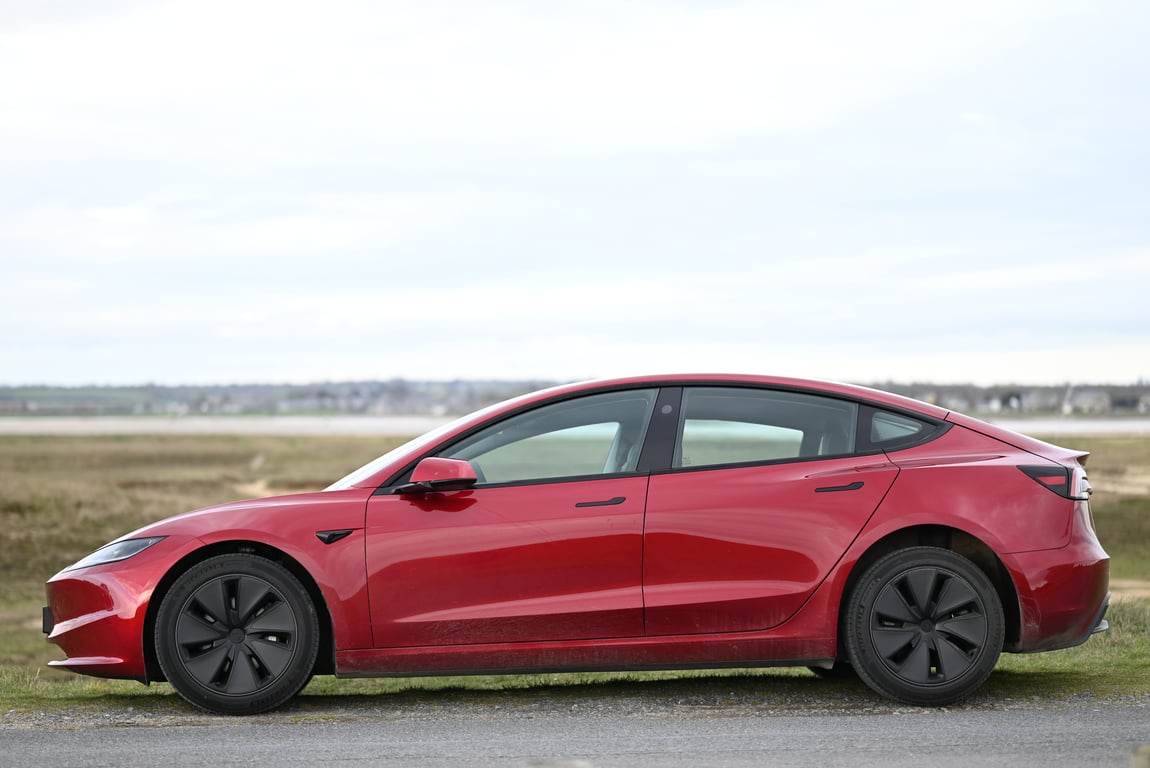
There are premium models with high-end features, but also high-range prices. The BYD Han aims to fill the gap between these models. The Han is designed to be a value-oriented model, but feels upscale enough to be a flagship sedan.
Positioning the Han as a value-oriented flagship model is more interesting than simply calling it a ‘Tesla-killer’. Comparing all EVs to Tesla is a lazy evaluation of the competition. No doubt Tesla has significantly advanced technology for vehicle efficiency, incorporating the latest software, visibility in the market for supercharging, as well as setting the standard for other automakers. As a consumer, you're not buying the competition. You’re buying a vehicle that has to function daily. It has to comfortably and safely transport your passengers taking everyday wear in stride.
The BYD Han models the EV sedan as an integrated unit, instead of an evolution of the tech. The design of the BYD Han with its low stance composes itself efficiently on the highway and in the city and when compared to other EV SUVs there are many advantages for having a sedan.
Sedans make sense. They have lower centers of gravity. Looking at frontal area, designs of sedans make for a more planted feel on the road. When cargo height is a concern for you, you may need and EV SUV, but there are a lot of drivers for whom a sedan will be just fine.
When we look at the commuter, couple, small family, and long-distance road travel markets, we see clear advantages of the electric sedan as more rational. The Han illustrates this well.
BYD’s Real Advantage is Vertical Integration
The case for the BYD Han is not about a single breakthrough feature, but about how BYD approaches building electric vehicles. BYD has a lot of control over EV components, especially batteries and electric drive. This level of vertical integration gives a company more control over the supply, cost, and engineering of a vehicle when compared to companies that need to put together an EV from a long list of outside suppliers.
For consumers, when it comes to battery cost and the confidence around batteries, this level of vertical integration is very important. Consumers rightfully have a lot of concerns around battery health over the long term, battery replacement, costs, safety, and charging. A manufacturer that builds its own connected system around EV hardware has a good opportunity to optimize the vehicle around these concerns. This doesn’t mean that every BYD vehicle will be the best, nor does it give BYD a free pass on needing to publish a good warranty, but it is a more credible foundation than adding a big battery pack to an otherwise conventional vehicle architecture.
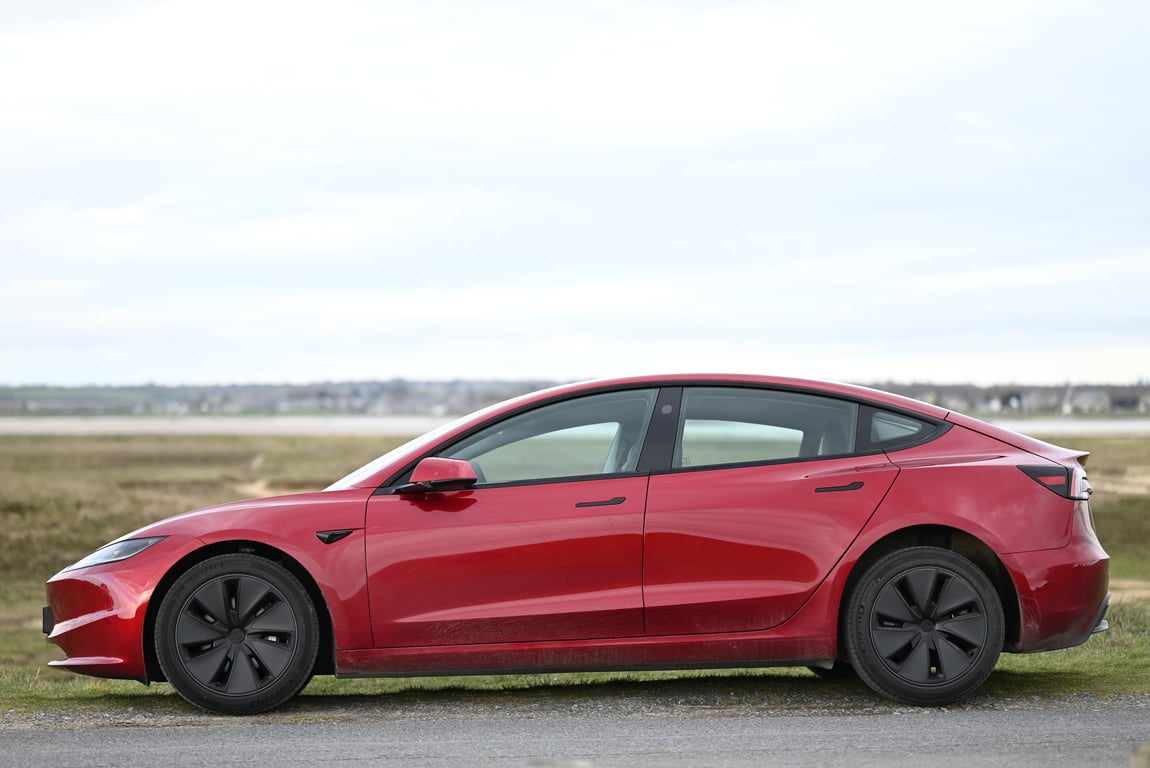
BYD is known for using LFP battery technology in many of its EVs. LFP is often discussed as if it is either clearly the best battery technology or clearly the worst. However, these conversations are usually not productive. The more practical way to look at it is the trade off is more complicated than that.
The durability and thermal stabilities of LFP batteries give them advantages when used in EVs with more value based designs. Other chemistries can have advantages when it comes to energy density and can be better for packaging or extending range. Will the name of the chemistry in the brochure make the buyer interested? No. They will be most concerned with the real world driving range, the behavior of the charger, the warranty of the battery, performance of the battery in their climate, and the battery’s long term dependability.
The Han shows how some companies will incorporate battery strategy into their pricing to offer an effective value option. The battery, in most other cars, is an invisible, high tech cost that gets stuffed into the back of the car.
Premium EVs should NOT equate a large central screen. The dashboard of a car in a showroom may seem less cluttered, but in the real world that may mean a more distracting and less convenient driving experience. Premium quality means not having to enter menus while driving, as there are clear physical controls for all functions, and the vehicle is comfortable, quiet, and controlled while being highly visible and providing a good amount of storage.
The BYD Han is a good example. In the premium comfort sedan class, it has excellent digital displays and connected driver aids, as well as a good, safe cabin. The focus on these features is justified. The important aspect is the execution.
U.S. buyers will have to resist the temptation to simply judge the Han by the pictures of screens, leather like trim, rear seat adjustments, etc.
Some things that seem premium in the promotional images will feel inconsistent in real-life use. For example, software may include lots of features, but may be poorly translated. Driver assistance systems will sometimes feel advanced, but will sometimes behave in ways that are unpredictable in heavy traffic or poor driving conditions. The difference between good equipment and good ownership is in the execution.
The value-first premium thesis is the right way to think about this. Customers should expect more than the basics from the top tier EV, but they shouldn't have to pay a luxury brand premium to get heated seats or safety tech, a nice interior, and a good infotainment system. The Han sets a standard that makes ignoring this an unfair market practice.
Performance Isn't Everything
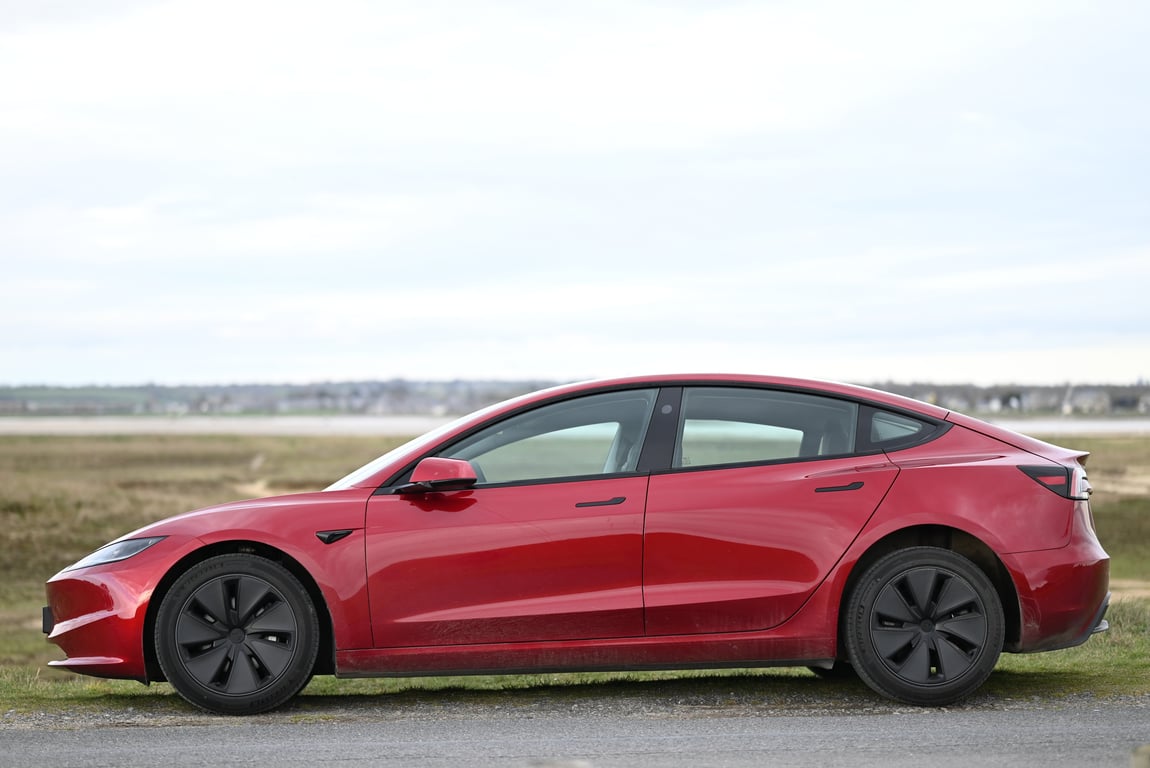
All EV sedans can be fast and torquey. Flagship EVs will naturally draw attention away from the crowd because of the zero-to-60 obsession. It's a poor measure of how good an EV may be. Pretty instant torque helps you drive easier and convenience when merging. It also gives you little information about the car's ride, brakes, steering, how good it is in winter conditions, how reliable charging will be, and how tired you will be after a long trip in it.
A good BYD Han should be judged by the same standards as any other serious family sedan.
How does the vehicle hold up on uneven roads? How is the cabin on the highway? Can the climate system be easy to use? Are the rear seats actually usable? How is the feedback provided on the brake pedals with both regenerative and friction braking? How are the charging and navigation systems?
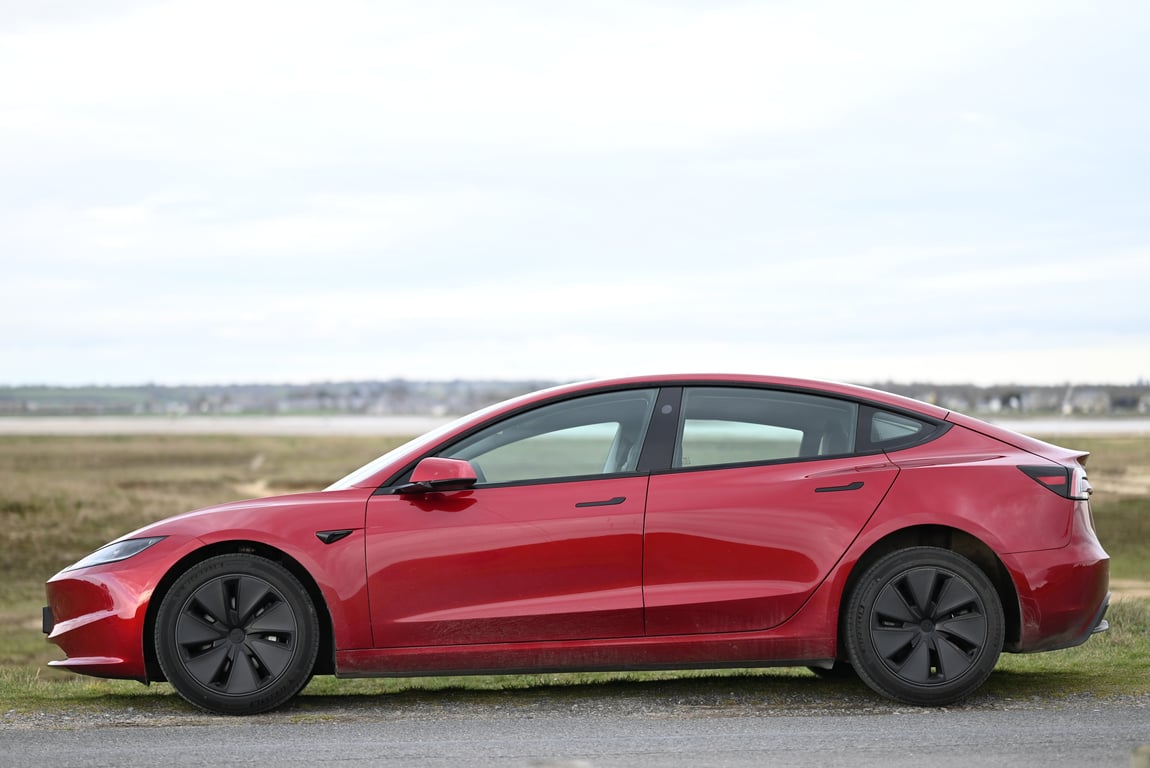
These are the considerations that give the most insight as to how well a vehicle performs. A flagship EV (like the Han) has to have performance so there is confidence in the vehicle, but the balance that can lead to more comfortable use, lower costs, and a more strategic approach to battery prevents the performance features from becoming a quick improvement that wears off in a few years.
-------------
The U.S. Availability Question Cannot Be Ignored
The biggest question for most Americans is obviously how vehicles can be available for purchase (as opposed to just piquing an interest). Potential interest in the BYD Han is not adequate for a 'go-to' purchase. Potential interest in the BYD Han is not adequate for a 'go-to' purchase. Buying/selling, financing, servicing, and insuring the vehicle all have important roles in determining whether an EV is a viable purchase.
Most of the time, when people talk about overseas EVs, they are not considering reality. Even if a vehicle is competitively priced in another country, it can still be a poor purchase decision for a U.S. consumer due to insufficient support for servicing the vehicle or establishing a supply chain. A low cost purchase price cannot overcome the uncertainty of a long wait for a replacement part, uncertainty of support for diagnostics, and the inability to obtain insurance for the vehicle.
Ownership infrastructure is part of the product.
The presence of ownership infrastructure does not diminish the Han's presence. It clarifies it. For U.S. drivers, the BYD Han is both a product and a yardstick. If and when a later version of the Han reaches the U.S. through appropriate sales and support infrastructure, it should be reviewed based on its complete local offering, as opposed to presumptions based on another country. Until that time, its primary value to U.S. consumers is something more intangible: the Han creates competitive pressure by demonstrating high integration of sophisticated design and battery systems at more accessible prices.
### How the BYD Han Compares Conceptually With Established EV Sedans
The BYD Han joins the other established electric sedans, but comparisons should be made cautiously. When considering the Tesla Model 3 and Model S, the Hyundai Ioniq 6, the BMW i4, the Mercedes-Benz EQE, the Lucid Air, and other electric sedans, different compromises are made with respect to efficiency, luxury, performance, charging infrastructure, and/or dealer support, resulting in no clear best choice. The most appropriate choice depends on the prospective owner's intended use case.
The Han halo effect stems from the value for money proposition. Other premium German sedans may utilize their legacy and focus on superior driving dynamics and dealer support, while the Han seeks to provide a premium offering without the legacy. Furthermore, the Han suggests that there can be a line of offerings that provide other luxury sedans with a more complicated interior experience.
Whereas some ultra-high-end EVs strive for record levels of range or acceleration, the Han asks whether a sedan that doesn’t break the bank and maintains a reasonable price can fulfill expectations.
This is a question that will appeal to certain buyers and put off others. A driver who has a favorite dealer, UI or a known resale value may be inclined to buy from the local trusted brand. A performance enthusiast may favor a vehicle with more impressive track capability over an otherwise less focused vehicle. There are definitely valid preferences that go beyond a badge. However, these preferences should not inform thinking that a premium badge will lead to a better value.
Smart Buyers Expect these things
If the BYD Han is relevant in your local market, do not base your consideration on styling or marketing. Think about the facts of ownership that make EVs useful in your daily life.
The actual battery warranty matters – the length of the coverage, capacity retention, what is and isn’t covered, and if the warranty can be transferred to a subsequent owner.
Independent tests may be available to evaluate the real world range at various speeds and under differing climate conditions.
A vehicle’s charging capacity is a curve, not an absolute number. A peak number that is reached briefly matters less than the rate at which meaningful range is added for a typical stop.
Evaluate the quality of available chargers on your route as well as how compatible your vehicle is with each.
Take advantage of the opportunity to drive the vehicle and see for yourself the quality of the infotainment system and controls as well as the behavior of advanced driver's assistance features. Evaluate camera quality as well.
Find out the answer to where all support, service and repair of the vehicle as well as maintenance and diagnostics will be performed.
Find out what the insurance quote will be.
The EV repair and part situation can greatly affect the pricing for insurance.
The total EV purchase cost includes financing, home charging upgrades, registration costs, and expected resale uncertainty.
This checklist applies to all EVs, but it is the most important for new EV sellers. Consumers like to quote a competitive sticker price, but that is only the beginning. EVs with high repair costs or insurance can become poor value purchases. Conversely, an EV with high initial purchase costs that has good service access and high efficiency can be the best purchase over the long-term.
The BYD Han is the strongest EV to follow this philosophy. It does not think an EV flagship sedan should cost thousands at a traditional luxury price. An EV should have good design, available eSeries technology, comfort for the passengers, and good overall design.
The BYD Han has the right philosophy for how an EV should be packaged and priced for the consumer.
U.S. buyers should remember that just because the EV is being sold internationally does not mean it is ready for the local market. The EVs should have service covered, have the safety features and technology validated, should have adequate insurance, should have clear access to parts, and should have good warranty coverage.
The BYD Han has a good philosophy for EVs. Other manufacturers should take that philosophy and EV into consideration as well.
You no longer need to choose between a cheap EV that feels like a compromise or a top-tier sedan that will put you in debt. With the introduction of the Han, these unnecessary distinctions have been eliminated. If it is able to launch stateside, the Han has set the bar for other premium sedans that will follow. It evaluates premium sedans based on how much value they offer, instead of how much money they cost.